


My thoughts on kinbaku, what it makes possible, and the meaning we give it.
Looking Beyond the Rope
I like taking things out of their original context. Taking a step back, looking at the bigger picture and recognising the patterns underneath. Things that seem very different sometimes have quite a lot in common.
I do this with kinbaku too. Beyond the ropes and techniques, I see trust, control, vulnerability, communication, intimacy and expectations. Things I recognise in sex, friendships and romantic relationships.
That makes me question what we mean when we call kinbaku special. The experience can certainly be special. I find it interesting to look at how the practice, the people and the circumstances come together to create that experience.
Structure, interaction and meaning
You can tie the same bondage and make it playful, caring, sexual, controlling, painful or intimate. The technique gives you possibilities. How you use them changes what happens.
I find it useful to look at this through three connected aspects.
Structure is the framework. The bondage, roles, agreements, boundaries and context. Practising a technique and tying privately might involve the same tie, while giving the people involved different starting points.
Interaction is what happens between us. How we communicate, respond, direct, hesitate, play or care for each other. This is where we use the possibilities of that framework.
Meaning is what it represents to each of us. A challenge, creative activity, expression of desire or moment of closeness. Those meanings can differ between the people involved.
All three influence each other. What I hope for affects how I enter an encounter. What happens can change what it means to me. My expectations are already present before anyone picks up a rope.

What kinbaku makes possible
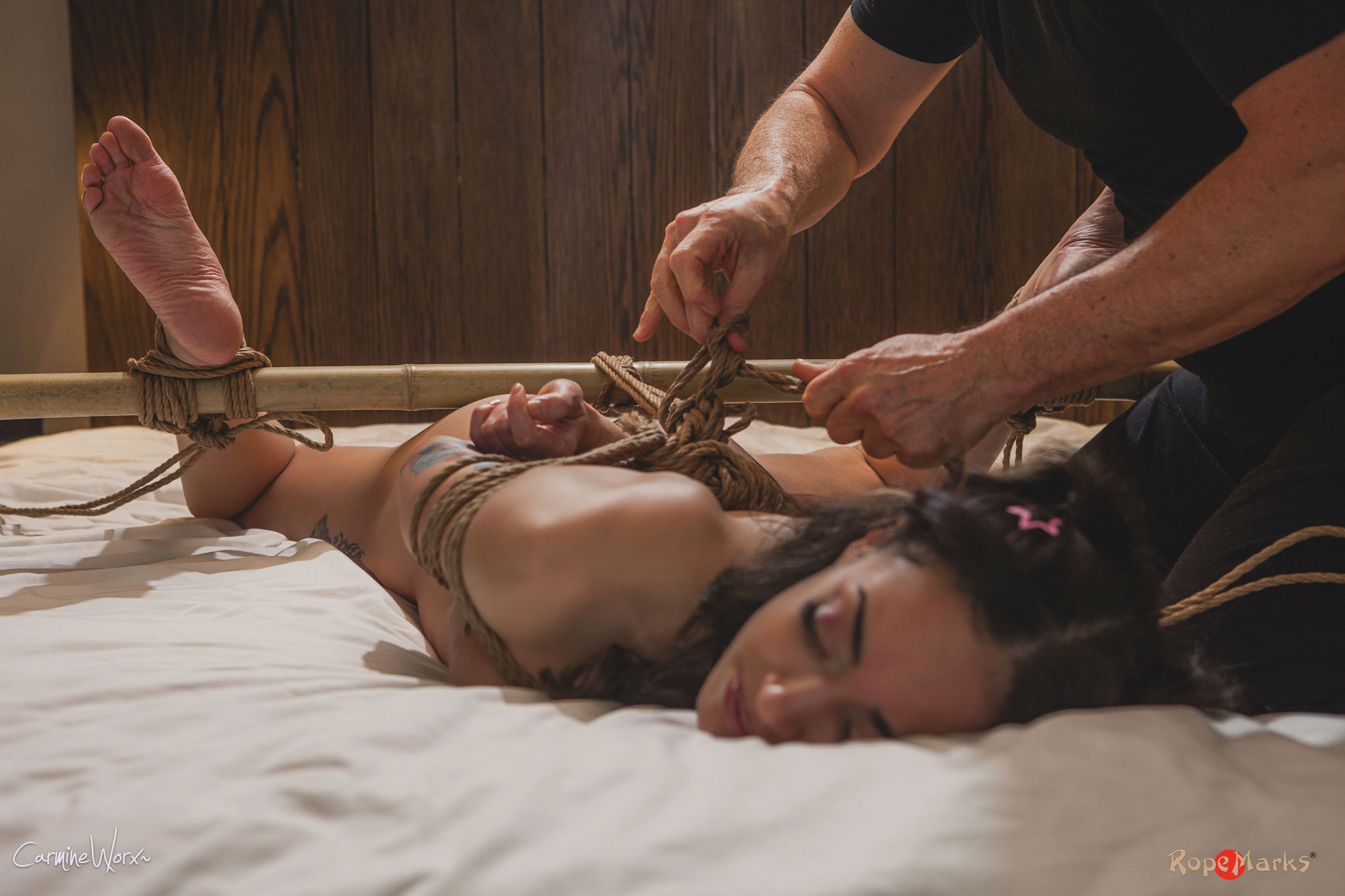
There is a reason I use rope. Someone directs a movement. Someone allows themselves to be moved. Touch, tension and pauses become ways of communicating.
I can see how that framework might help someone approach something they find difficult elsewhere. A defined role might make giving up control easier. Being physically held might help someone accept attention. Rope might offer a way to express a desire they struggle to put into words.
That is a meaningful contribution. It is part of why I choose rope. But when something powerful happens, I hesitate to explain the trust, connection or emotional depth simply by saying that we were doing kinbaku.
I can take someone’s experience seriously while questioning how we explain it. What made it possible? The restraint, the attention, the person they were with, the permission they felt? Their desires or state of mind that day?
If the explanation stops at ‘that’s the depth of kinbaku’, it leaves too much unexplored for me.
Looking beyond the activity
This broader view leaves me with plenty to appreciate. I enjoy kinbaku’s physical language, its possibilities and the attention it asks of me.
I can call rope a tool and still care deeply about using it. Its particular qualities help shape what becomes possible.
When I step back, though, I keep finding people underneath the practice. People bringing their histories, desires and ways of relating into something they do together.
That is where I look to understand what happened. Kinbaku can help make an encounter deeply significant. For me, recognising the human dynamics within it makes that experience more understandable, while leaving its significance intact.
Cover model: Reese The Ram




Leave A Comment