

Learning a new tie can be interesting. A different structure, another position, new possibilities for movement or suspension. But the pattern is only part of what happens between two people.
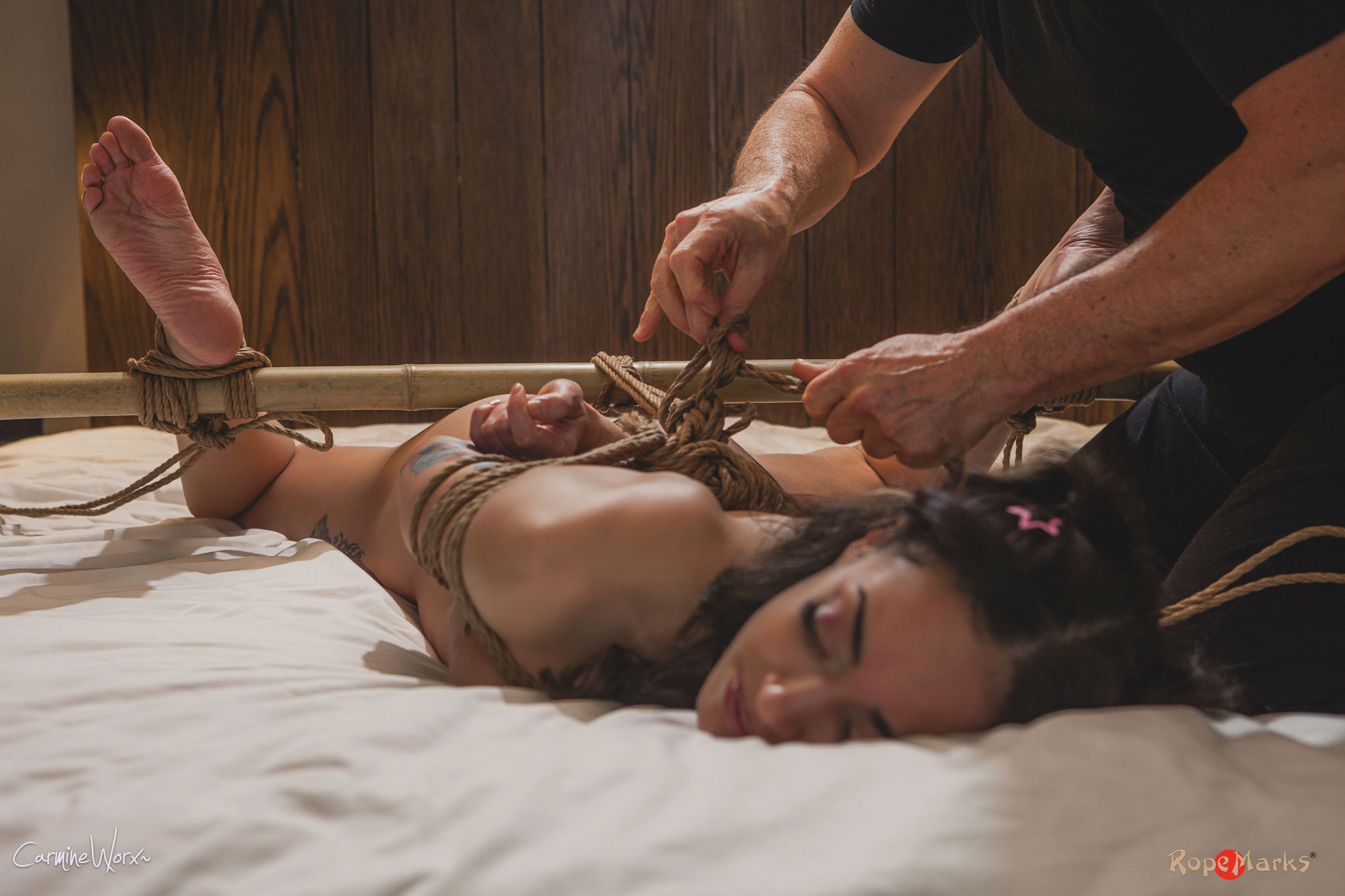
Play can happen before you start tying, while you’re tying, or after the tie is finished. Sometimes in all three moments, sometimes in just one or two. Take the tie in this photograph, for example. The pattern itself is an arms-up tie combined with folded legs. That gave me the structure and the position I wanted. The play happened while I was adding the wraps around her body. Tight wraps, while being physically very close to her. The pressure, the proximity, the way I handled her body. For me, those were not simply technical steps towards a finished tie. They were part of what was happening between us. And then the tying was finished.
She stayed in that position for a while. It was difficult for her, and it was something she wanted to experience. I stayed close. She knew I was there. I didn’t need to add more rope, move her or do anything else. Being there with her was enough. It was something she went through for herself, for me, and for us. That is also part of what makes rope interesting to me. Sometimes the play is in what you do. Sometimes it is in what you don’t do.
Of course, the patterns and technique matter. They create the structures that make these experiences possible. And understanding those structures, the forces involved and your partner’s limits is essential.
During our Playful & Pervy Kinbaku masterclass, we’ll teach patterns, from floor-based ties to working with bamboo, suspensions and transitions. Some may be familiar. Others may be new. But we’ll also explore what happens around those patterns. How you handle your partner, how you use pressure and proximity, how you respond to each other, and how the interaction can change before, during and after tying.
Because the interesting part is not only what you tie.
It’s what happens between you.





Leave A Comment