

Japanese rope terminology
Kaikyaku Kani Shibari (開脚蟹縛り)
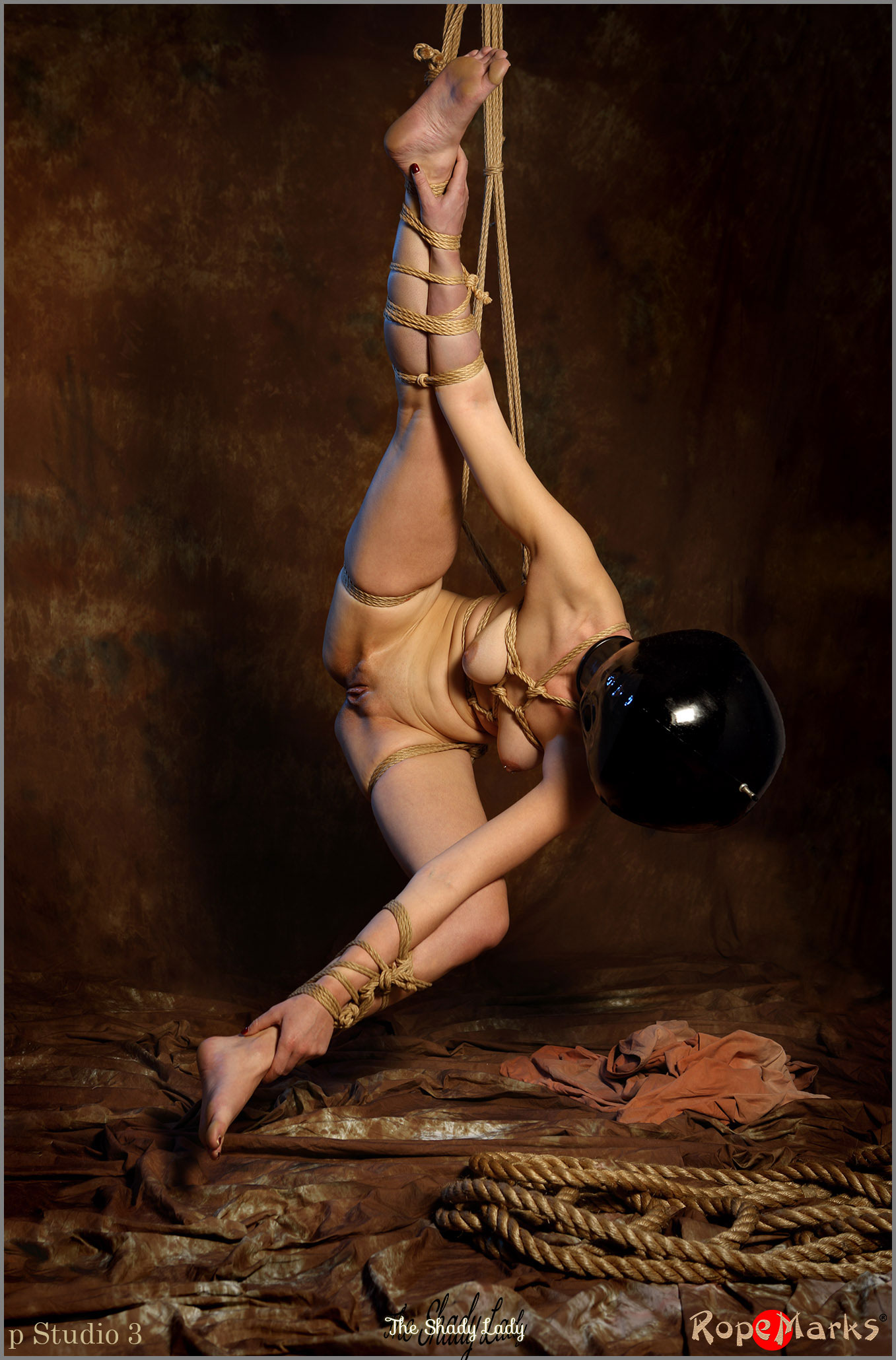
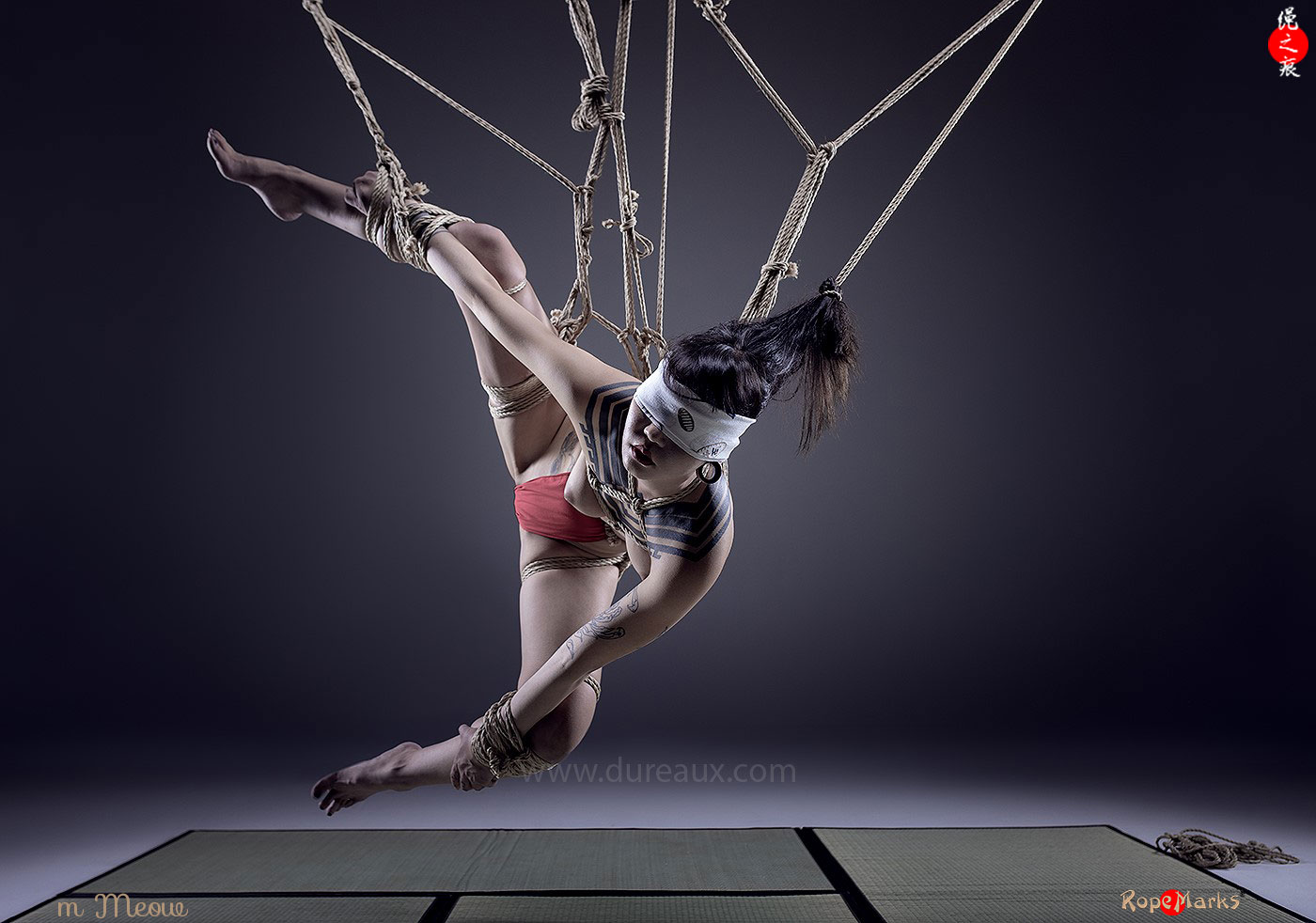
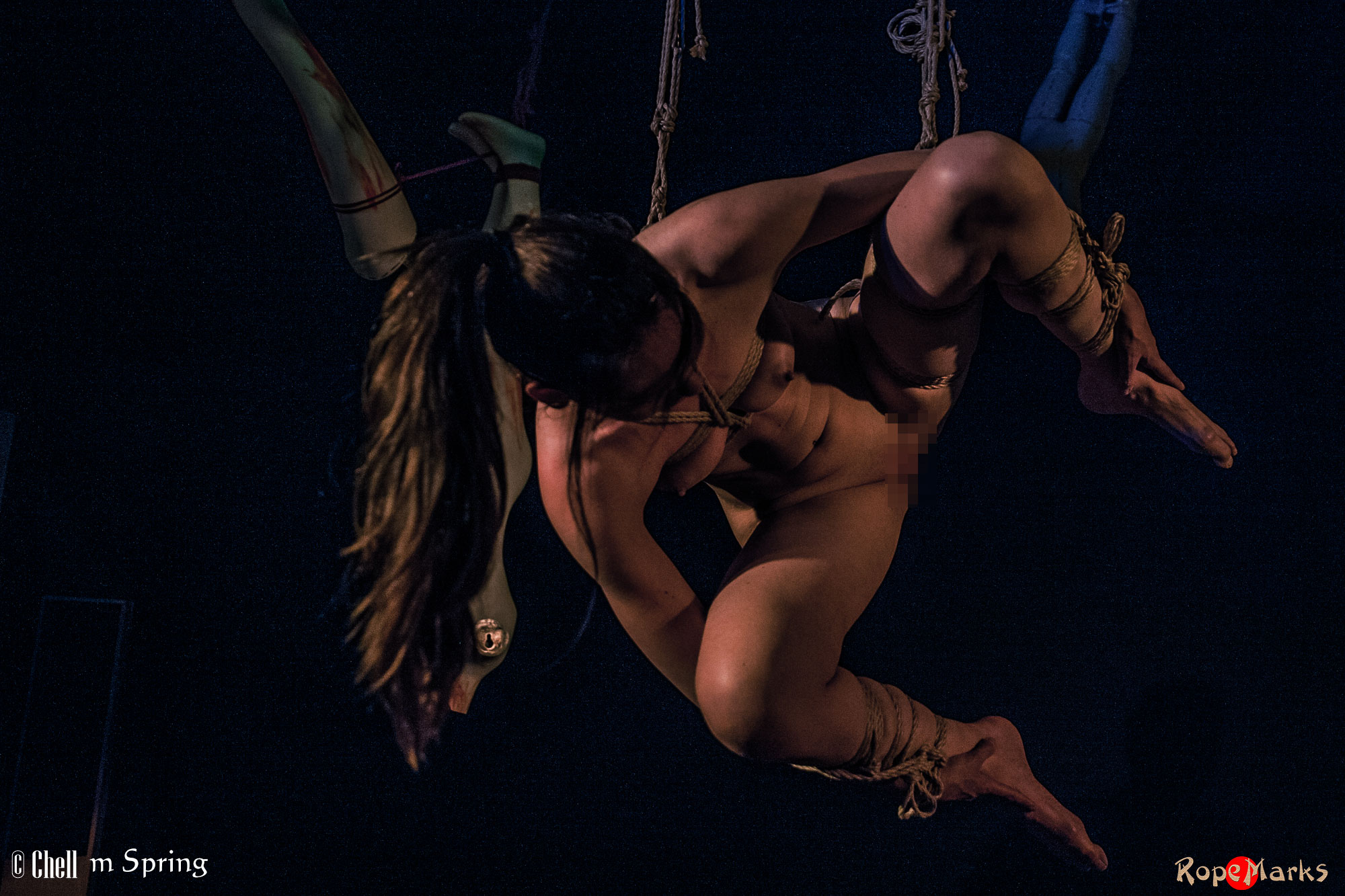
Kaikyaku Kani Shibari (開脚蟹縛り) translates approximately as spread-legged crab tie. It describes a rope bondage position in which the model’s legs are spread, with each arm secured to the corresponding leg.
Japanese: 開脚蟹縛り
Reading: kaikyaku kani shibari
開脚 (kaikyaku): spread legs
蟹 (kani): crab
縛り (shibari): tying or binding
RopeMarks usage: spread-legged crab tie
Note: The name describes the position and its resemblance to a crab. As with many names used in Japanese rope bondage, the exact arrangement of the ropes may vary between practitioners.
Meaning in Japanese
The name combines three elements: kaikyaku (開脚), meaning spread legs; kani (蟹), meaning crab; and shibari (縛り), meaning tying or binding.
Together, they describe a spread-legged position with a crab-like appearance. The name refers to the resulting configuration rather than to one particular rope pattern.
The position in kinbaku
In this position, the model’s wrists and upper arms are secured to the ankles and thighs of their respective spread legs.
The legs may be spread further by connecting them to external anchor points, creating a more extended variation of the position.
The defining characteristic is the relationship between the arms and the spread legs, rather than a single fixed method of tying.
Examples
Kaikyaku Kani Shibari in images
The following photographs illustrate the position and variations in its arrangement.

Related
Momo Shibari is described in the RopeMarks glossary as the contrasting position of Kaikyaku Kani Shibari, with the arms positioned between the spread legs and the hands tied to the ankles.


Leave A Comment