Tsuginawa
Japanese: 継ぎ縄 Tsugi (継ぎ): follow nawa (縄): rope A technique for joining two ropes to create one long rope, a rope extension.


Japanese: 継ぎ縄 Tsugi (継ぎ): follow nawa (縄): rope A technique for joining two ropes to create one long rope, a rope extension.
Sword hilt wrap finishing; rope is wrapped around other ropes.
General term for tying a model to a low table, preferably incorporating the table-legs as anchor points.
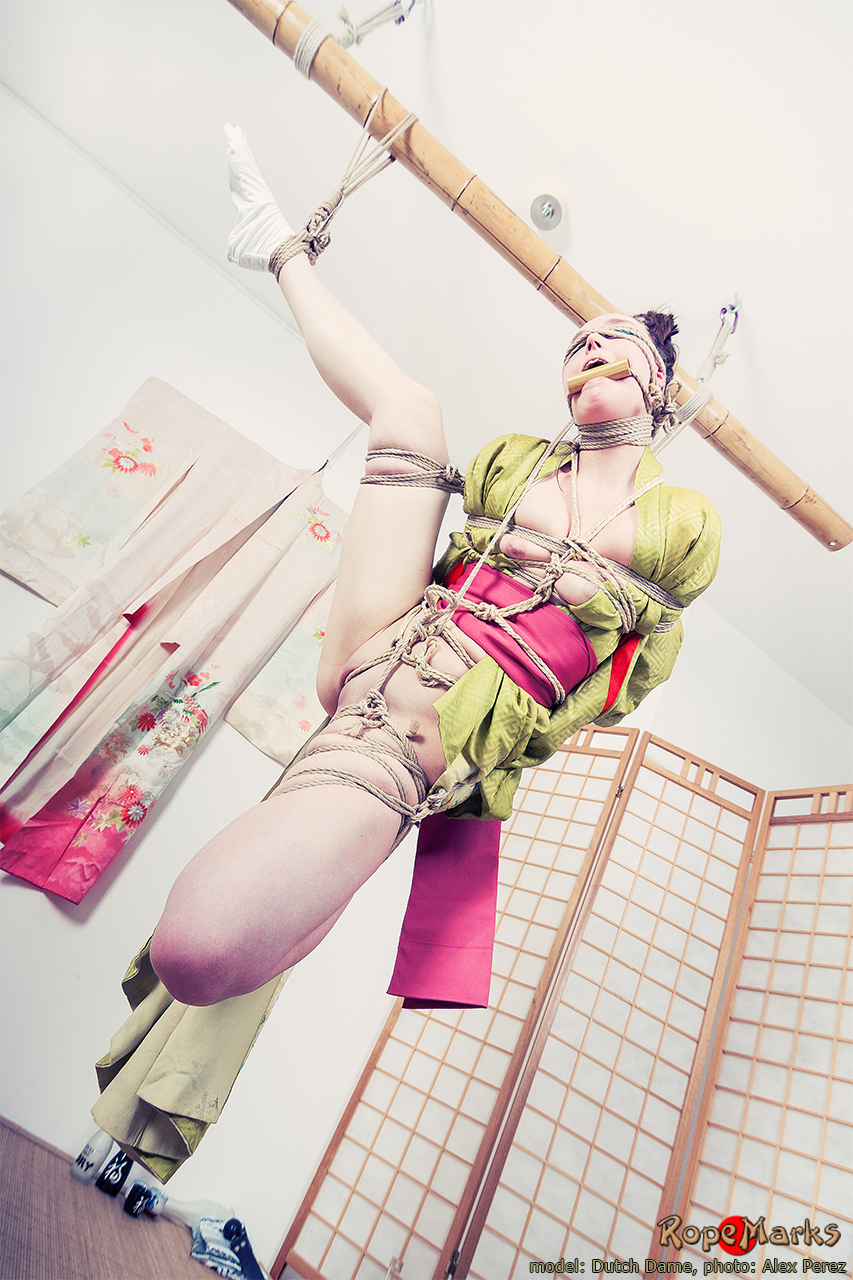
Japanese: 吊り Any rope suspension. Becomes "zuri" when preceded by another word. See also: Tsurizeme.
Japanese: 吊り縄 Tsuri (吊り): See "Tsuri" nawa (縄): Rope The main suspension rope." See also: Tsuri, Nawa zuri.
Japanese: 吊り落とす Tsuri 吊り(): See "Tsuri" Otosu (落とす): To drop, could also mean "to lose"... don't lose your model when you "drop" her... Suspension drops. Where you cut the main suspension [...]
Being bound and suspended by rope. The second classic torture technique from Tokugawa Japan, now evolved into a mainstay of shibari play and performance. See also: Tsuri.
Japanese: (ushiro)襷縛り Ushiro (): "in the back" tasuki (襷 / タスキ): A string to "tie up" the sleeves of a kimono shibari (縛り): "Bondage" The ushiro tasuki shibari is a [...]
Japanese: 後ろ手縛り Ushirode (後ろ手): Hands/wrists on the back shibari (縛り): "Bondage" Generic term for a tie with the hands on the back, i.e. Takategote.
A sideway "strappado" suspension. See also: Ushirode shibari, Yoko zuri.
RopeMarks
Kinbaku · Amsterdam · Since 1999
EXPLORE
ROPEMARKS FAMILY
PARTNER